Development Timeline
A Season of Growth: Feb–Sep 2025


V1 Design
⚙️ Key Features
-
Laser-cut body
-
Powered by Raspberry Pi 4
-
Uses 18 MG-9g servos
✅ Pros
-
Easy to swap servos
-
Stable structure
-
Built with inexpensive components
❌ Cons
-
Body too large compared to legs
-
Servos not powerful enough
-
No planning for electronics
V2 Design
⚙️ Key Features
-
Laser-cut body
-
Powered by Raspberry Pi 4
-
Uses 18 MG-92b servos
✅ Pros
-
Lightweight design
-
Quick to produce
-
Requires little material
❌ Cons
-
Difficult to assemble
-
Fragile structure
-
Sharp edges
V3 Design
⚙️ Key Features
-
3D-printed body
-
Powered by Raspberry Pi 4 + PCA9685 microcontroller
-
Uses 18 MG-92b servos
✅ Pros
-
Easy to assemble
-
Sturdy build
-
Smooth, polished design
❌ Cons
-
Printing is time-consuming
-
Heavier compared to past versions
-
Messy PCB arrangement

_edited_edited.png)
V4 Design
⚙️ Key Features
-
3D-printed body
-
Powered by Raspberry Pi 4 + ESP32 with custom PCB
-
Uses 18 MG-92b servos
✅ Pros
-
Easy to assemble
-
Sturdy design
-
Organized wiring
-
Secured electronics

_edited.png)
_edited.png)
_edited.png)
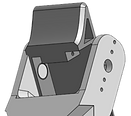
Designed with built-in servo horn slots—just slide in the horn, set the angle, and secure it with a screw if necessary.
All three joints are 3D-printed as a single piece, with no glue, screws, or assembly required.
After numerous trials to achieve the optimal tolerance, the flexibility of PLA was utilized to allow the axle to clip into the joint, making it easy to assemble, detach, and stable at the same time.
The body consists of three levels: Level 1, Level 2, and Level 3. Levels 1 and 2 are fastened together with four screws, while Levels 2 and 3 are secured with six screws. All servos are mounted on Level 2, with each fixed firmly in place using screws for stability. The electronic components are also secured using screws to ensure proper alignment and durability.